Cockroach janta party protest: a movement or a mess
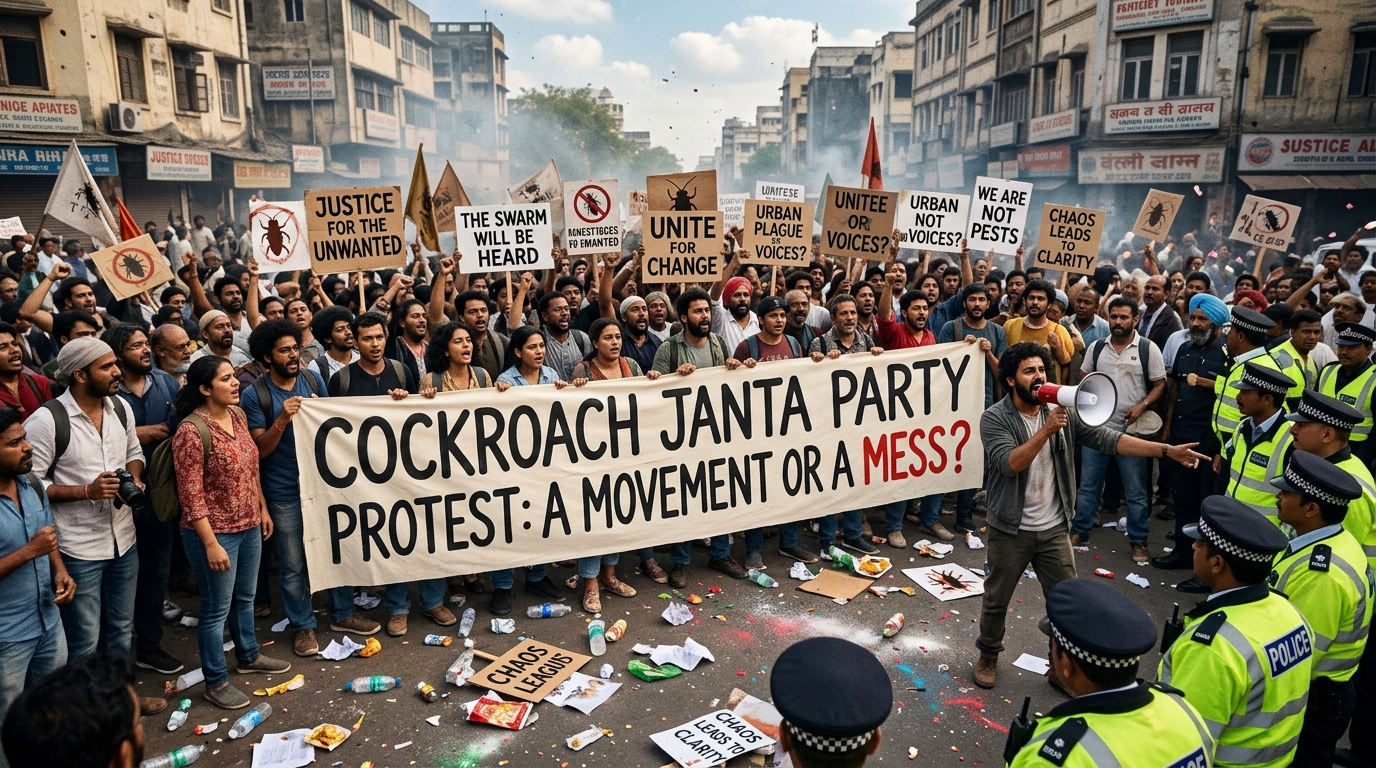
Cockroach janta party protest: a movement or a mess On Saturday, 6 June, students, aspirants and a few awakened families protested against India’s education system and its leaders under a flag of cockroach Janta Party. After CJI Justice Suryakant’s cockroach remark on youth, a satire meme website slowly became popular and caught fire with the recent paper leak and CBSE board irregularities. The name itself is provocative and symbolic. Cockroaches are creatures often associated with survival in the harshest conditions—ignored, unwanted, yet nearly impossible to eliminate. By adopting this identity, the youth behind the CJP protest are making a bold statement. The rise of the Cockroach Janta Party (CJP) protest has quickly turned into one of the most talked-about youth-led phenomena across digital spaces. What initially appeared as a humorous, almost absurd expression of dissent has rapidly evolved into a symbol of deeper frustration among India’s youth. But beneath the memes, hashtags, and viral reels lies an important question: Is this a meaningful movement shaping democratic discourse, or just a chaotic outburst with no direction? Emergence brief of CJP The cockroach janta party was born nearly three weeks ago, after the Chief Justice of India reportedly linked government critics and unemployed youth to cockroaches and parasites. Abhijit Depke, an Indian student from America, has created this meme website with the intent of parody and meme factory, which further exploded as a channel for anger over exams, jobs and a fraying sense of economic crisis. After the NEET exam leak, the debunking of the CBSE OMS system, and other issues by a few +2 Gen Zs, the system turns to deniable mode and loses students’ trust. Some mainstream media also open their shield for the government, but major digital channels and a few leading newspapers showed their strength of spine and spoke the truth. This leads to a breakout of students and raises their voice through social media; meanwhile, some online educators also take a stand for students, which helps the issue to be in the mainstream. During these happenings, Dipke gained enough space in a popular individual group, which I think encourages him to move further with the intent of turning memes into a movement. Abhijeet announces his arrival in India and lead protest The Context: What Sparked the Protest? The emergence of the CJP protest cannot be separated from the broader socio-political climate. Over the past few years, issues such as exam irregularities, paper leaks, unemployment, and lack of institutional accountability have deeply affected students and young aspirants. Many young people feel trapped in a cycle where Hard work does not guarantee fair outcomes. Systems meant to provide opportunities appear compromised more over Questioning authority often leads to dismissal or backlash.This growing frustration needed an outlet—and the CJP protest became that outlet. The Digital Nature of the Movement Unlike traditional protests defined by physical gatherings, slogans, and organized leadership, the Cockroach Janta Party protest thrives in the digital space. Social media platforms act as its primary battleground, where Memes replace pamphlets, Hashtags replace slogans, Viral videos replace speeches This format allows rapid participation. Anyone with a smartphone can contribute, share, or amplify the message. It democratizes protest but also introduces unpredictability. The movement’s tone—often sarcastic, humorous, and ironic—makes it highly shareable, especially among Gen Z audiences who resonate with this style of communication. The Strengths: Why It Can Be Seen as a Movement Despite its unconventional nature, there are strong arguments supporting the idea that the CJP protest is indeed a legitimate movement. 1. Voice to the Disillusioned For many students and young citizens, this protest provides a platform to express grievances that often go unheard. It breaks the culture of silence and obedience. 2. Accessibility and Inclusivity Traditional protests require physical presence, organization, and resources. In contrast, CJP allows participation from anywhere, making it more inclusive. 3. Creative Resistance The use of humor, satire, and irony transforms complex issues into relatable content. This not only spreads awareness but also engages audiences who might otherwise ignore political discourse. 4. Breaking Fear Barriers By disguising criticism within humor, participants can question authority without appearing overtly confrontational. This lowers the psychological barrier to dissent. The Weaknesses: Why Critics Call It a Mess While the movement has energy and reach, it also faces significant criticism. 1. Lack of Structure and Leadership Unlike traditional movements, CJP does not have a clear leadership or organizational framework. This makes it difficult to channel its energy into concrete outcomes. 2. Absence of Clear Demands A successful protest typically revolves around specific demands or policy changes. The CJP protest often expresses anger but lacks a unified agenda. 3. Risk of Misinformation The fast-paced nature of social media can lead to the spread of half-truths, exaggerated claims, or unverified information, weakening credibility. 4. Perception Problem The heavy use of humor and memes can cause the protest to be dismissed as unserious or immature, especially by older generations and policymakers. Movement vs. Mess: Understanding the Reality The Cockroach Janta Party protest exists in a grey area. It is neither entirely a structured movement nor purely a chaotic mess. It is best understood as an emotional uprising with cultural power, but without institutional direction. The emotions driving it—anger, frustration, and a desire for accountability—are very real. However, the absence of organisation limits its ability to create tangible change. The Bigger Picture: A Shift in Protest Culture The rise of the CJP protest highlights a larger transformation in how protests are conducted in the digital age. Today’s youth Prefer decentralized forms of expression, Value relatability over formality and Use humour as a political tool Operate within online ecosystems rather than physical spaces.This signals a shift from traditional activism to what can be called “networked dissent”, where influence spreads horizontally rather than hierarchically. What Lies Ahead? The future of the Cockroach Janta Party protest depends on its evolution, If it manages to Develop clear demands and Build credible voices or leadership Transition from online expression to real-world impact it has the … Read more